

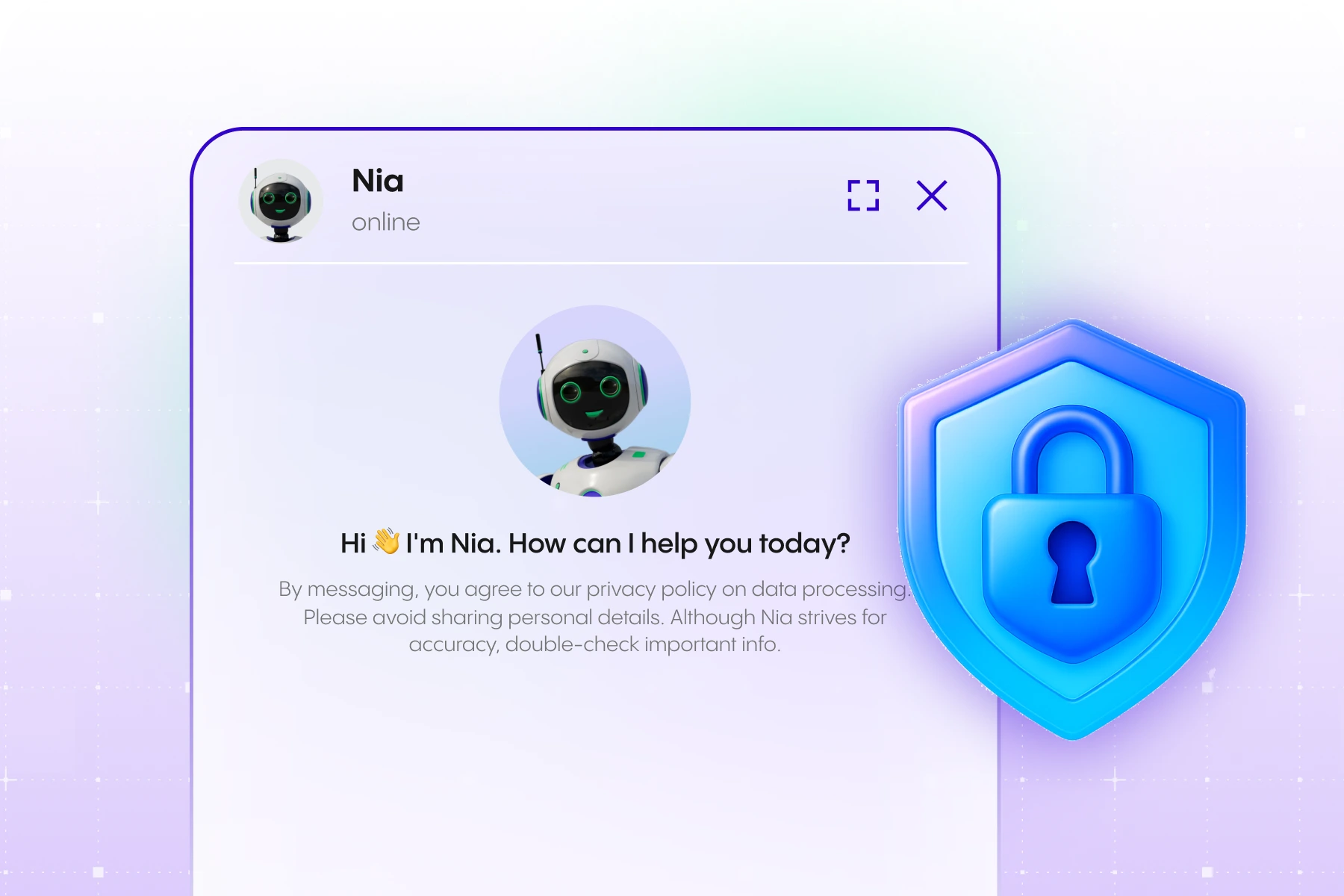
As the day progresses, communication channels often feel increasing pressure. Phone lines and inboxes fill with familiar questions: order status, appointment changes, billing issues, or service availability. Each request matters to the customer, but inside the organisation many of these questions repeat frequently — often alongside internal requests that follow the same patterns every day.
NFON AI Bots are designed to function as an always-on digital support and automation layer across voice, chat, and messaging channels. They are intended to absorb both external enquiries and internal requests so high-volume environments can operate more consistently. The premise is straightforward: interactions still arrive, but they do not always require a human agent to provide the first response, trigger the next step, or move a process forward.
NFON AI Bots operate as intelligent voicebots, chatbots, and phonebots that allow people to speak or type requests in natural language. Instead of rigid menus or scripts, bots can deliver immediate answers, check statuses, update information, collect structured input, or guide users through defined processes. This applies not only to simple questions, but also to more complex, multi-step actions that would otherwise require manual handling across systems.
Beyond answering questions, AI Bots can actively automate workflows. They can trigger follow-up actions, forward data into connected systems, pre-qualify requests, and support internal processes such as IT requests, employee enquiries, or form-based workflows. This turns the bot layer into an operational interface — one that reduces manual effort and shortens process chains before human involvement is required.
An important part of the experience is the transition to human support when needed. If a customer or employee wants to speak with an agent, live chat or call transfer can be supported by context already collected during the automated interaction. This reduces repetition and supports a smoother handover between automation and human service, especially in complex or regulated environments.
The environments where bots are applied are often demanding: high-volume, multi-channel, and tightly regulated. Availability alone is not sufficient. Solutions must also support multilingual communication, integrate with existing systems, and operate within strict compliance requirements. NFON AI Bots are designed to meet these conditions while maintaining a consistent and controllable experience across channels.
The relevance becomes clear across industries because the same patterns repeat. Healthcare providers handle appointment requests, prescriptions, and internal coordination. Utilities manage billing enquiries, meter readings, and service changes. Retailers address order tracking, returns, and availability. Public administration manages information requests, forms, and internal service workflows. In each case, volume is driven by processes — not by a lack of answers.
Operationally, AI Bots help organisations manage peaks in demand more intelligently. By handling routine interactions and structured workflows automatically, they reduce the number of enquiries reaching live teams and interrupt manual process chains early. Organisations adopting AI Bots report measurable efficiency gains and cost savings in high-volume scenarios, while maintaining continuous availability for customers and employees.
Performance metrics provide reference points for scale:
Companies adopting AI Bots save over €250,000 per year
90.5% first-call resolution with NFON AI Bots
Response times under one second, with 24/7 availability
This also addresses the broader gap between external simplicity and internal complexity. Customers and employees see one organisation and expect clear outcomes. Internally, even simple requests can trigger multiple manual steps across systems and teams. AI Bots help shorten this path by handling structured tasks directly and preparing complex cases with context before human involvement.
Trust remains central. Communication data is sensitive, and in Europe, GDPR, the EU AI Act, and industry-specific rules define what is acceptable. European hosting and clear data-handling principles ensure communication data stays under control, is processed in Europe, and is not used to train public models.
Implementation is designed to be incremental. Organisations can activate bots for specific use cases, assess impact, and extend automation across channels and workflows without turning adoption into a disruptive re-platforming effort.
With NFON AI Bots in place, many enquiries and tasks can be resolved immediately — day or night. When human expertise is required, interactions arrive with structure and context. Complexity does not disappear, but it is handled earlier, faster, and more intelligently, allowing teams to focus on work that truly requires human judgment.