

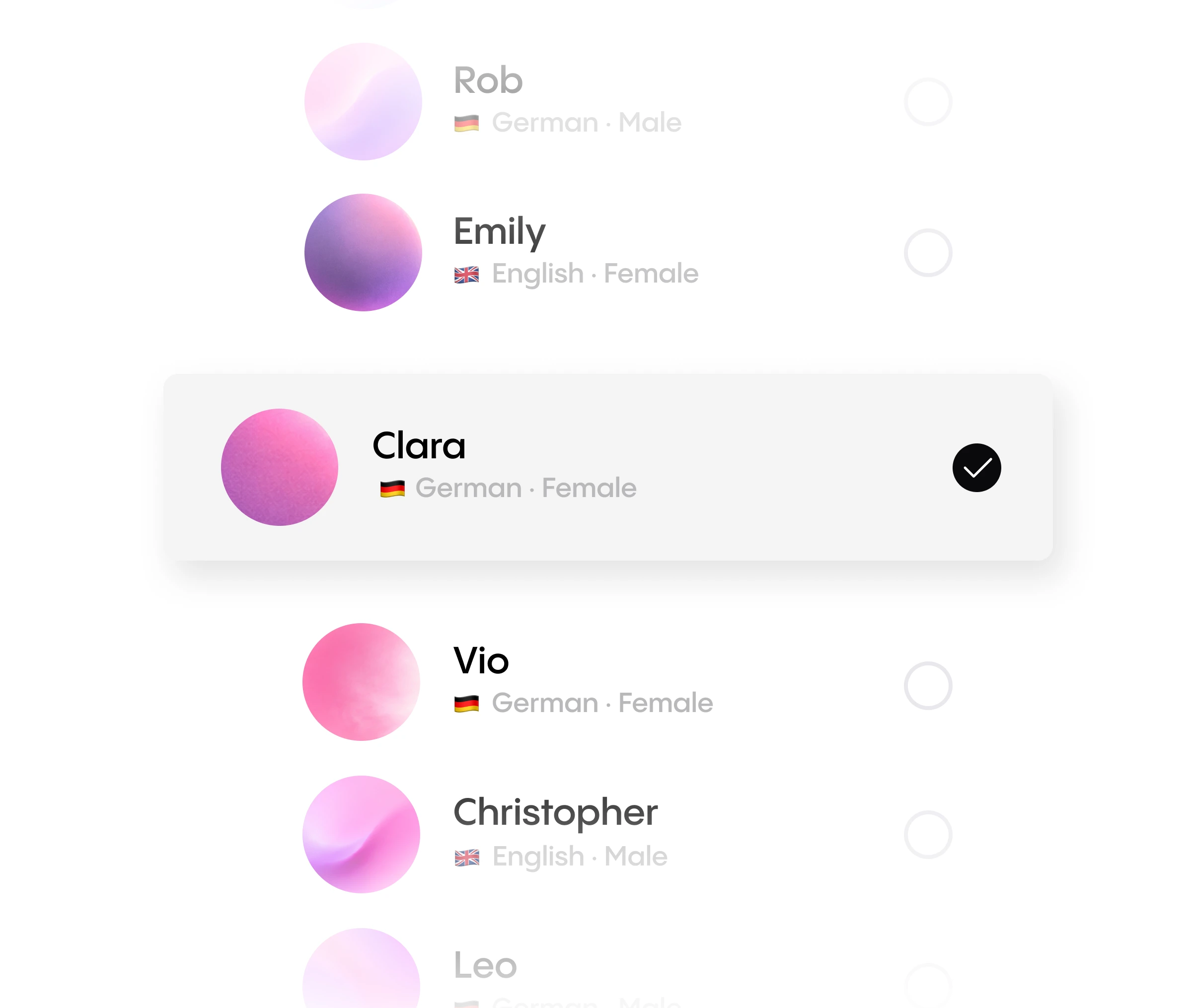
One thing that is easy to miss in the current AI discussion is how much of the customer experience depends on technology most people never see.
A customer does not care about which Text-to-Speech engine powers a conversation. They care whether the interaction feels natural, whether the voice sounds right, whether responses arrive quickly, and whether the experience feels professional.
Those outcomes are shaped by decisions behind the scenes. For voice agents within the botario platform, NFON and botario have developed proprietary Text-to-Speech technology to create a stronger foundation for performance, control and future voice AI innovation.
Customers Hear the Outcome, Not the Engine
Text-to-Speech converts a written response into the voice a caller hears. That sounds straightforward, but the quality of the interaction depends on much more than producing audio.
A delay can interrupt the rhythm of the conversation. A date, account number or company name pronounced incorrectly can reduce confidence. A generic voice may not reflect the organisation behind it. At high call volumes, variable performance and usage-based costs can become operational and commercial concerns.
This is why Text-to-Speech is not simply a technical component. It directly shapes the customer's experience of the voice agent.
Fast Responses Make Conversations Feel Natural
Voice conversations depend on timing. Cloud-based TTS can swing between 1-3 seconds of latency depending on provider load. For a customer waiting on the phone, that variability is noticeable, especially when it happens repeatedly throughout a conversation.
botario TTS is self-hosted, eliminating that provider variance and supporting consistently fast response times. Input streaming improves the experience further: the user starts hearing the response almost instantly, rather than waiting for the LLM to finish generating everything first.
The result is a smoother exchange that feels more responsive and less automated.
The Difficult Words Matter
Real customer conversations are full of content that voice technology must handle correctly: dates, numbers, abbreviations, reference numbers, product names and specialised terminology.
Most Text-to-Speech models lack the ability to handle dates, numbers and other special cases. botario TTS uses a custom-trained neural network on the server side to correctly normalize text, improving speech quality in those cases.
Synonym controls add another layer of precision. They are predefined word substitutions that tell the engine to say a different word than what is written. For example, replacing "NFON" with "en-fon" controls exactly how the name is pronounced.
Greater Control Over a Critical Part of Voice AI
Voice AI experiences have often depended on external cloud providers for Text-to-Speech. This places a critical part of the customer experience on third-party infrastructure and makes the organisation dependent on the provider's performance, policies and pricing model.
Customers can run botario TTS entirely on their own premises, with no dependency on external cloud providers. Developed in Europe, it supports greater technological sovereignty and alignment with GDPR and EU AI Act requirements. All training data is open-source and fully licensed, and its origins are known.
For organisations with high call volumes and very high data protection requirements, this combination of self-hosting, transparent data sourcing and consistent performance can be particularly important.
Predictable at High Volume
Usage-based cloud pricing can become difficult to predict when a voice agent handles a large number of calls. botario TTS gives high-volume customers flat, predictable costs, with no per-call surprises. This creates a more stable commercial foundation as voice automation scales.
Where Text-to-Speech Becomes Business Critical
Service and support hotlines: Fast, consistent responses help the interaction remain fluid when customers need assistance.
AI-powered phone assistants: Natural voice quality and controlled pronunciation help create a professional first impression.
Appointment and notification services: Dates, times, numbers and names need to be spoken clearly and consistently.
High-volume customer communication: Predictable performance and pricing become increasingly important as call volumes grow.
Data-sensitive environments: Self-hosted infrastructure provides greater control over a critical part of the voice AI stack.
A Stronger Foundation for Every Conversation
Customers may never see the technology behind an AI conversation, but they experience its impact in every response. They hear whether the interaction is fast, natural and accurate. They notice whether the voice reflects the professionalism of the organisation behind it.
botario Text-to-Speech gives greater ownership of that experience and gives customers a stronger foundation for voice agents that need to perform consistently at scale.
Find out more about NFON AI Bots through this link.