What is Cloud Telephony?
Cloud telephony provides Internet-based voice communication (VoIP) services, hosted by a third-party provider and accessible to customers directly over the Interne


Cloud telephony provides Internet-based voice communication (VoIP) services, hosted by a third-party provider and accessible to customers directly over the Interne
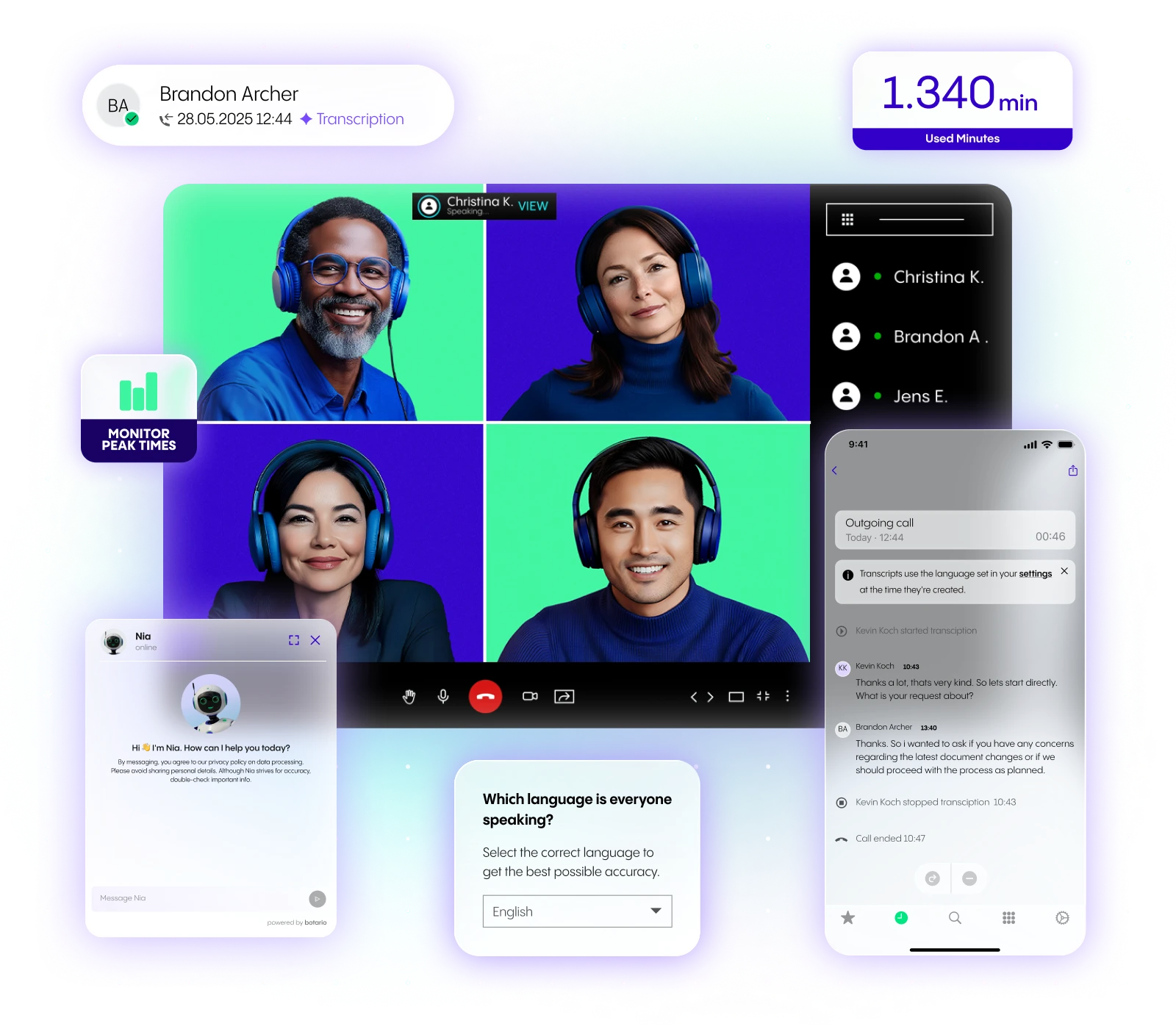
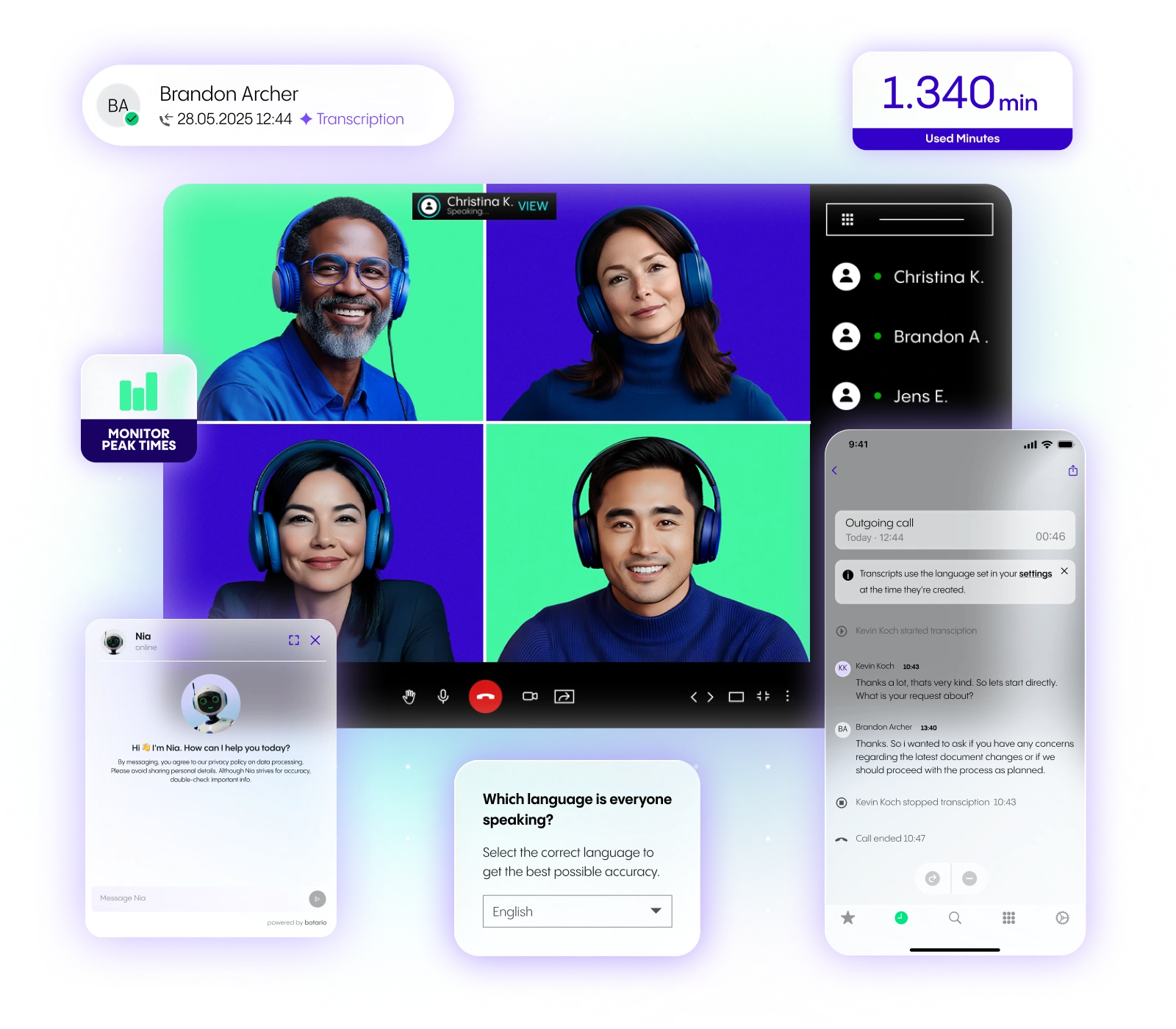
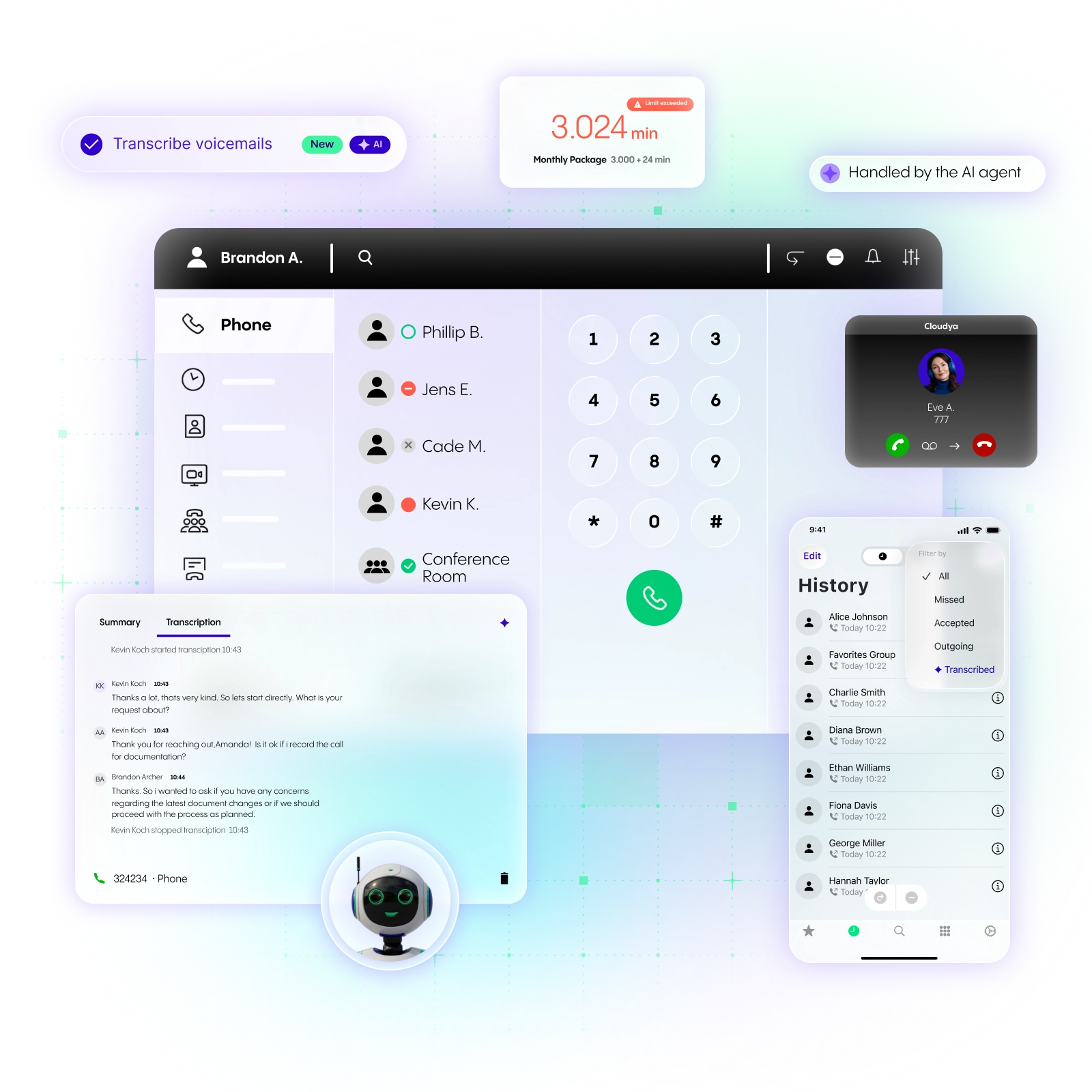
The system routes voice over the Internet instead of through traditional phone lines. When a user makes a call, the software converts voice signals into data packets and transmits them via secure data centres.
These services can be accessed through a digital interface, with no need for local PBX hardware.
Cloud telephony systems replace the need for conventional enterprise telephony hardware, such as private branch exchanges (PBX). They are easier to implement and maintain, and at a lower cost.
Scale user numbers up or down to match your business needs, and seamlessly introduce new features.
Benefit from reduced upfront costs and predictable monthly fees, with no hidden charges or long-term contracts.
The cloud solution is accessed via a web or application-based portal that is integrated into an organisation’s existing IT infrastructure.
Cloud telephony features go above and beyond traditional PBX telephony – including video call functionality, screen sharing, and more.
Users can access the services from virtually anywhere using a smartphone or laptop: whether they are in the office, at home, or on the move.
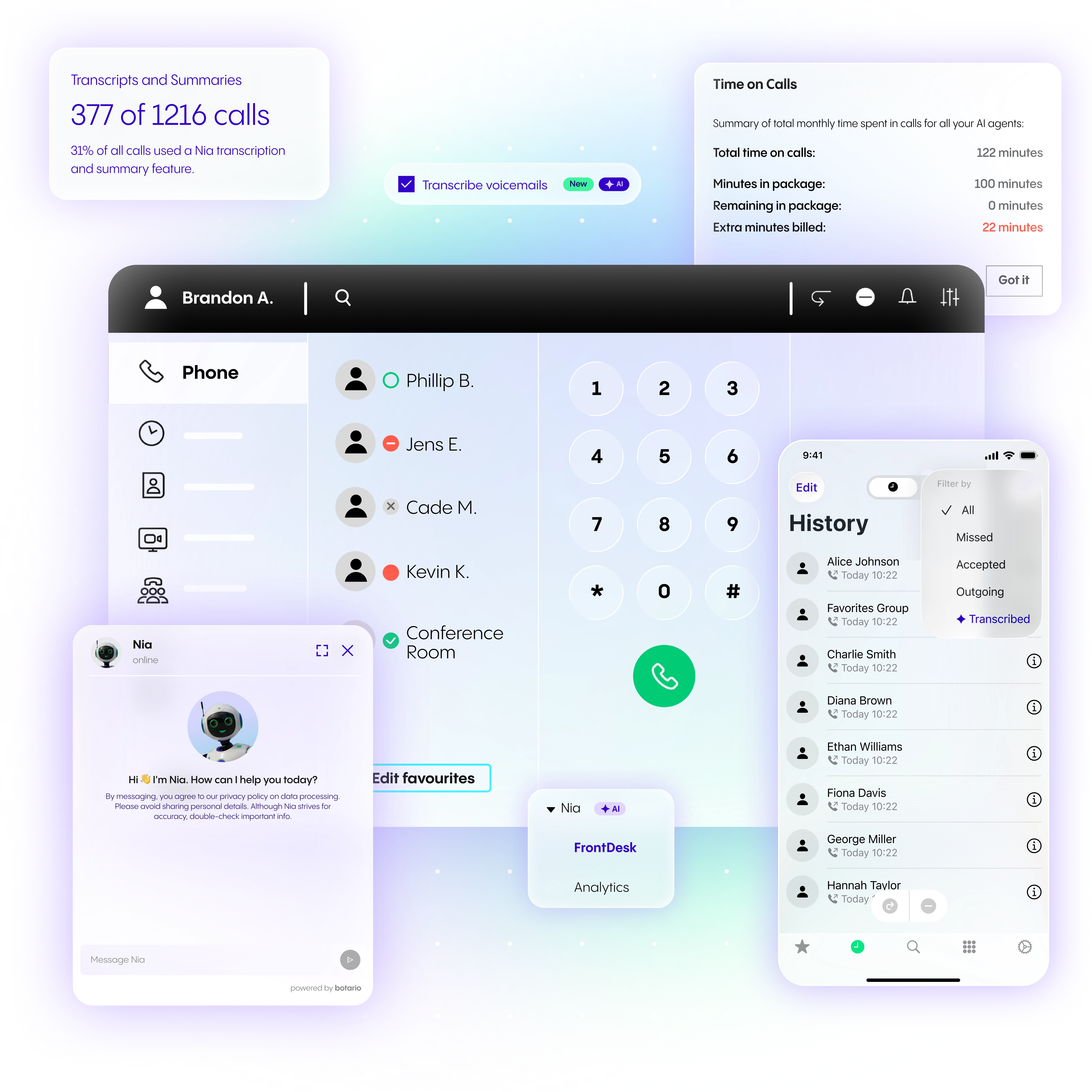
Cloud telephony enables companies to automate call flows, integrate AI voice assistants, and connect distributed teams in real time.
With features like number portability, dynamic user management, and cross-device accessibility, cloud telephony for business creates a seamless and scalable communication experience.
Security is one of the most important aspects of cloud telephony platforms. That's why we rely on state-of-the-art infrastructure and expert knowledge to protect sensitive data and ensure continuous service availability.

Best-in-class cloud infrastructure providers keep their customers’ data secure and ensure uninterrupted service availability. This includes storing data in highly secure, geo-redundant data centres.

Mission-critical data is replicated and stored in a different physical location. If the primary servers experience downtime, the service can seamlessly fall back onto the backup data copies.

Reliable cloud providers protect both their data centres and their customers’ data, from robust access control to intrusion detection, from data encryption to firewalls to physical security solutions.

We know our customers trust us with their data and rely on us to provide a failsafe business telephony platform, which is why we take security seriously. Our commitment to the most stringent data protection standards helps you be compliant too, whether you need to meet GDPR, MiFID II or PCI DSS requirements. Our solutions are delivered in an environment with the highest security standards, with guaranteed availability and uptime.
All customer data is encrypted. The NFON system itself is located at our own ISO-certified data centre, which has a resilient failover configuration with geographically separated servers. With the measures we take, we give our customers full peace of mind that their data is kept secure. If you’re a small to medium-sized business, can you always be confident in the highest availability and security of your data processing centres, including remote and mobile access? With NFON, you can.
We offer a vast range of advanced telephony features and sophisticated add-ons. Our powerful application suite has all the virtual tools you need for flexible and mobile working.
We offer sophisticated add-on solutions for diverse use cases, from contact centres and compliant call recording to tailored solutions for the hospitality sector.

With NFON, you can future proof your business and revolutionise the way you communicate. NFON is the only pan-European cloud PBX provider, counting more than 40,000 companies across 15 European countries as customers and more than 2,700 partners across Europe.
Cloudya, the cloud telephony system from NFON, gives you the flexibility to scale up and down according to your business requirements. Our flexible pricing models let you control your costs with predictable monthly charges.
You simply pay as you use. You can be up and running in less than 48 hours. And with the highest security standards.
While VoIP (Voice over IP) is the foundational technology that enables audio transmission via the Internet, cloud telephony builds upon it to deliver a complete communication solution.
The key difference between cloud telephony and VoIP lies in functionality and management: VoIP often requires on-site infrastructure like IP phones and local PBX systems, whereas cloud-based telephony is hosted entirely in the cloud.
This means that it includes not only calling capabilities, but also advanced tools such as call routing, IVR, voicemail-to-email, and integration with other business applications. In short, cloud telephony offers an out-of-the-box, maintenance-free communication system, while VoIP is just one technical component of it.
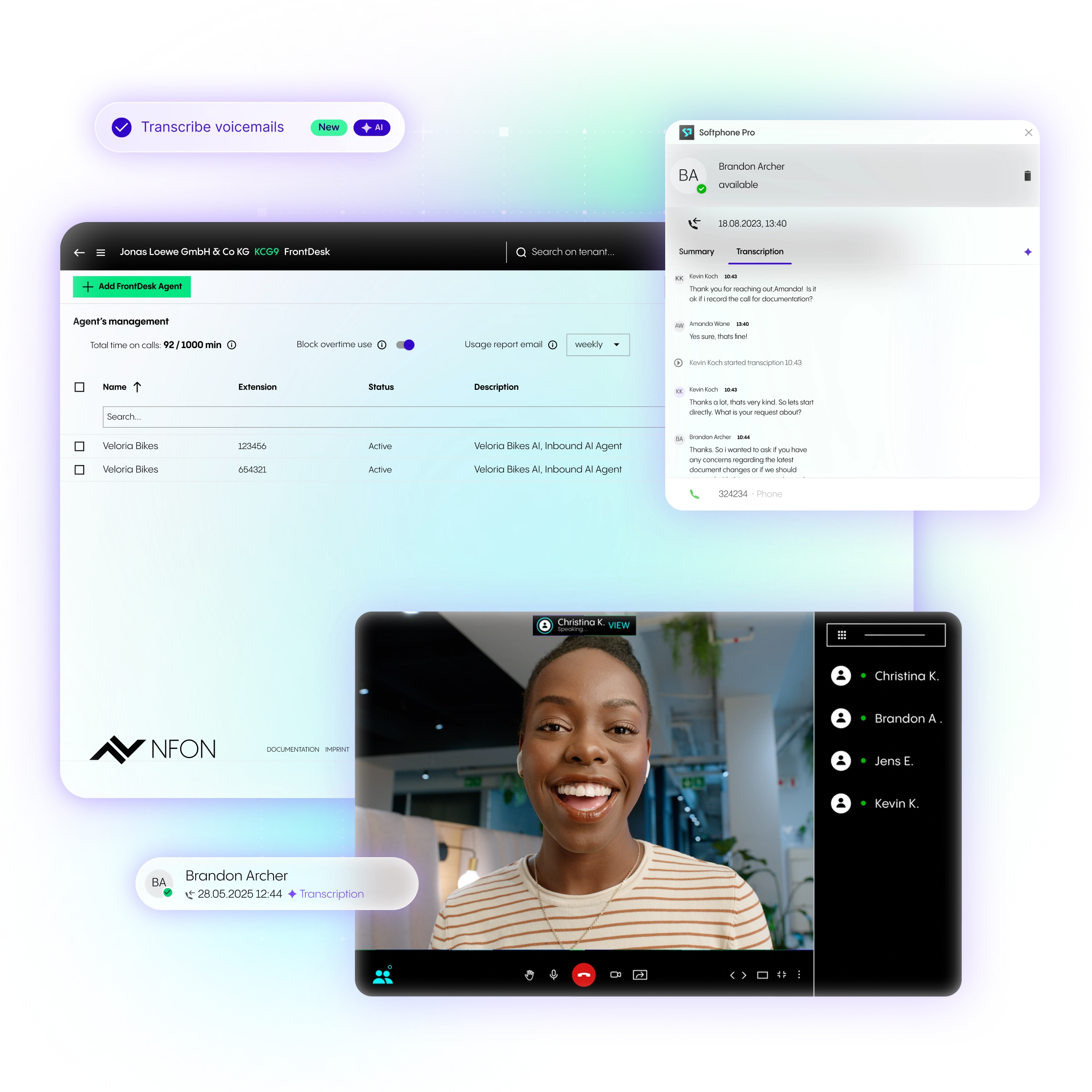
With cloud telephony services, businesses no longer need to deal with complex phone systems, hardware maintenance, and software updates. Instead, providers like NFON take care of everything, delivering a ready-to-use phone service that runs reliably in the cloud.
This includes guaranteed availability via SLAs, built-in compliance, and constant system monitoring to ensure smooth operation at all times.